

In the rapidly evolving landscape of artificial intelligence, the "TinyML" movement stands as a testament to the industry’s shift toward efficiency. By enabling complex machine learning models to execute on hardware as constrained as microcontrollers and edge sensors, researchers have unlocked a future where intelligent devices operate locally, privately, and with minimal power consumption. However, this progress has long been hampered by a persistent bottleneck: the absence of large-scale, high-fidelity datasets tailored to the unique constraints of ultra-low-power computing.
Today, a team of researchers from Harvard University—including Colby Banbury, Emil Njor, Andrea Mattia Garavagno, and Vijay Janapa Reddi—is tackling this challenge head-on with the release of Wake Vision. Representing a monumental leap forward, this new dataset provides the foundation necessary to propel person-detection technology into a new era of performance and reliability.
The Core Challenge: Why TinyML Demands a New Approach
To understand the significance of Wake Vision, one must first understand the architectural reality of TinyML. Unlike cloud-based AI, which leverages massive server clusters, TinyML models must reside within a few hundred kilobytes of memory. These models are inherently "under-parameterized" compared to the behemoths like GPT-4 or standard vision models trained on ImageNet.
For years, the field has relied on the Visual Wake Words (VWW) dataset. While VWW served as a vital proof-of-concept, its limited scope and scale have become a ceiling for innovation. As practitioners attempt to move from experimental prototypes to production-grade applications—such as smart home sensors that detect human presence or health-monitoring wearables—the need for a dataset that reflects the diversity and complexity of the real world has become undeniable. Wake Vision arrives not merely as an alternative to VWW, but as a paradigm shift, offering approximately 6 million images—a 100-fold increase over its predecessor.

Chronology: From Concept to Global Standard
The development of Wake Vision was born out of a realization that the "more is better" mantra of deep learning was hitting diminishing returns in the edge computing sector.
- The Identification Phase: Harvard researchers identified that while model architectures were becoming more efficient, the data used to train them remained stagnant. They observed that existing benchmarks failed to account for environmental variance, leading to models that performed well in lab settings but faltered in the chaotic reality of human-centric environments.
- The Data Aggregation Phase: The team undertook the massive task of curating 6 million images. This process was not a simple scrape of the internet; it involved meticulous filtering and labeling to ensure that the data would be useful for the specific task of person detection.
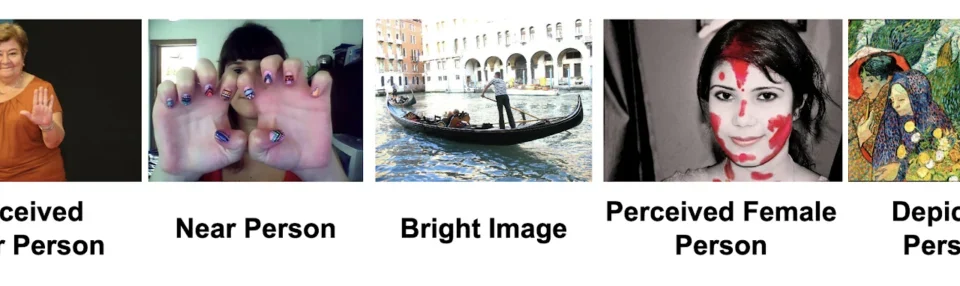
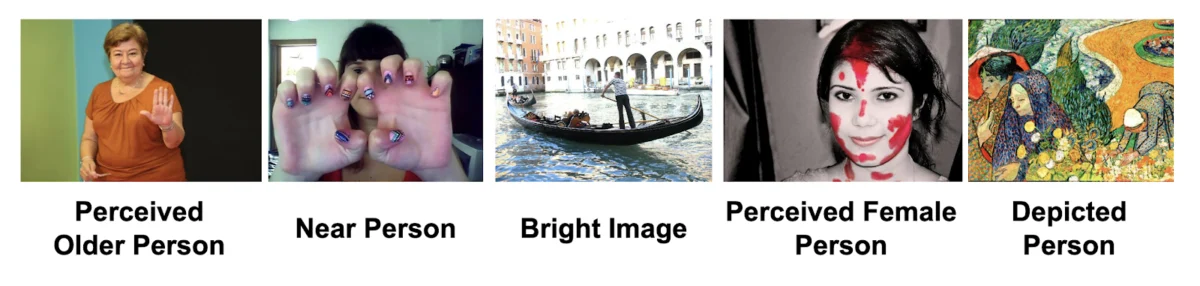
- The Benchmarking Phase: Recognizing that raw data is useless without evaluation, the team developed a set of fine-grained benchmarks. These tests were designed to stress-test models across various demographic, lighting, and proximity conditions, ensuring that the resulting models were not just accurate, but robust.
- The Public Launch: With the support of open-source initiatives, the dataset was released under the permissive CC-BY 4.0 license, ensuring that academic, hobbyist, and corporate researchers alike could leverage the work without restrictive barriers.
The Quality vs. Quantity Dilemma: Supporting Data
One of the most compelling insights provided by the Wake Vision team is the counter-intuitive nature of training under-parameterized models. In traditional machine learning, massive datasets with noisy labels are often considered acceptable because the sheer size of the model allows it to generalize through the noise.
However, the data presented by the Harvard team paints a different picture for TinyML. Their research reveals that data quality is paramount. For models with limited parameters (e.g., 78K to 300K), high-quality, clean labels yield significantly better performance than massive, uncurated datasets.
The Wake Vision team provides two distinct training sets: one optimized for sheer scale and one optimized for extreme quality. This dual approach allows developers to engage in a sophisticated training pipeline—using the larger, less-curated set for initial pre-training, and the high-quality, smaller set for fine-tuning. This tiered methodology has proven to extract the maximum possible performance from hardware that would otherwise be considered too "dim-witted" for complex visual tasks.

Official Perspective: The Researchers’ Vision
The team behind Wake Vision emphasizes that the project is more than just a repository of images; it is a tool for equity and safety. By providing detailed metrics on how models perform regarding, for example, "perceived gender" or "age," the researchers are forcing the industry to confront bias at the model-training level.
"TinyML applications are increasingly embedded in our daily lives," the team notes in their project documentation. "From security cameras to elderly care monitors, these devices are making decisions about human presence. If our datasets are flawed, our devices are biased. By providing fine-grained benchmarks, we are enabling developers to identify these limitations before they ever reach the end user."
The decision to release this on platforms like TensorFlow and to maintain an active leaderboard is a strategic move to foster a community-driven ecosystem. The leaderboard, in particular, acts as a living document of progress, allowing researchers to see exactly which techniques—be it data augmentation, quantization, or distillation—are currently yielding the best results on the Wake Vision standard.
Implications: The Future of Edge Intelligence
The introduction of Wake Vision has profound implications for the trajectory of the Internet of Things (IoT) and edge computing.

1. Enhanced Privacy
Because Wake Vision empowers more accurate and robust models on ultra-low-power hardware, it reduces the need to stream video footage to the cloud for processing. This "privacy-by-design" approach is essential as smart devices become more ubiquitous in private spaces.
2. Democratizing AI Development
By lowering the barrier to entry for high-quality training data, Wake Vision allows startups and independent developers to build competitive, world-class vision applications without requiring the massive capital or infrastructure of a tech giant.
3. Sustainability and Energy Efficiency
The core of TinyML is energy efficiency. A model that can accurately detect a person on the first pass, rather than requiring multiple attempts or high-powered processing, is a more sustainable model. As the world faces a mounting energy crisis, the efficiency gains enabled by better data are not just a technical win; they are an environmental necessity.
4. New Frontiers in Human-Computer Interaction
With the ability to reliably detect people in varied conditions (bright light, low light, different distances), the next generation of interactive devices will be far more responsive. From interactive retail kiosks to assistive robots, the precision afforded by the Wake Vision benchmark will be the standard by which all future edge-vision applications are measured.

Getting Started: A Call to the Community
For researchers and engineers ready to integrate Wake Vision into their workflows, the barrier to entry is intentionally low. The dataset is currently hosted on major platforms, and the associated codebases are fully documented.
The Harvard team has effectively built a sandbox for the future of TinyML. Whether you are an academic researcher looking to publish the next paper on neural architecture search or a hardware engineer looking to optimize a smart camera for a consumer product, Wake Vision offers the raw materials to turn your goals into reality.
As the industry looks toward a future where intelligence is distributed, local, and constant, the work of Banbury, Njor, Garavagno, and Reddi serves as a foundational pillar. By prioritizing the quality of data, they have provided the necessary spark to ignite a new wave of innovation in the TinyML ecosystem. The question remains: how will the community use this new power? With the leaderboard already populating with early entries, the race to build the next generation of intelligent, efficient, and private edge devices has officially begun.
To explore the data, participate in the leaderboard, and access the full suite of documentation, visit the official Wake Vision website. The path to smarter, more efficient AI is no longer a mystery; it is simply a matter of looking at the data, and thanks to Harvard’s latest effort, the data is clearer than ever.